

Sardineros
Cornwall's silver harvest

Our not so glorious, but typical, British Summer draws on apace and as we reach August, our attention in the shop focuses sou’-west’ards towards the port of Newlyn, nestling in between Penzance and Mousehole on Mounts Bay.
Newlyn holds a very special affection for me, as I’ve spent so much time there over the years, either at sea, on the fish market, on the quayside talking to fishermen, or enjoying a pint or two in the Swordfish or the Star with my many friends down there, (the choice of watering hole depending on where their allegiance lies).
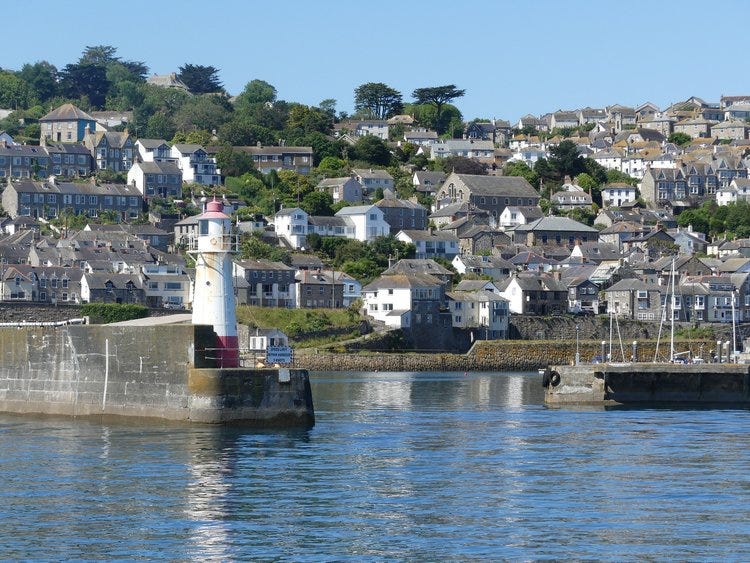
Summer in Newlyn is blissful. It’s very much a commercial working port and town, so you don’t have quite the hoards of tourists invading the streets and with its bustling and hard working atmosphere, it’s difficult not to fall completely in love with the place, especially when you’re there writing, as it just oozes inspiration.
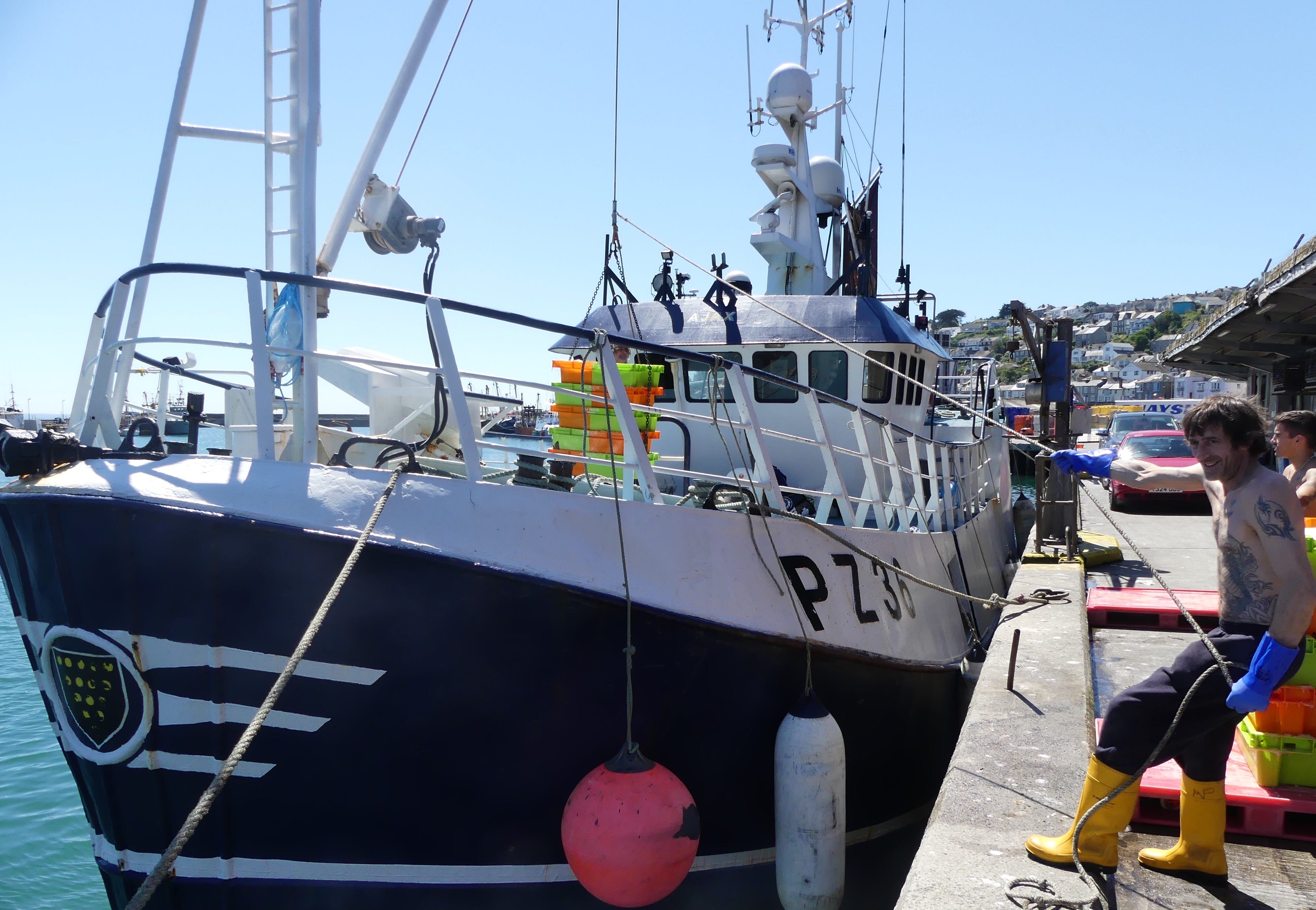
It’s easy for me to get carried away eulogising about the place, as there’s so much going on this time of year - hake, squid, lemon soles, haddock, red mullet, John Dory, lobster, crab and crawfish are all landed in abundance, but from mid July, one particular species dominates the scene and a whole fleet of vessels hunt it, with a competitive and eager zest, which when the weather allows, sees the nocturnal Mounts Bay alight with their twinkling work lamps, as they track and pursue their glittering prize - the Cornish Sardine.
For those of you of a certain era, you may have known them just as ‘Pilchards’, but back in the latter part of the last century, a whole new meaning was brought to the fishery, with a complete rebrand, which has been incredibly successful.
Of course sardines are one of nature’s ultimate health foods, boasting fish oil, calcium, iodine, magnesium, low cholesterol and vitamins B12 and D within their highly nutritious flesh.
Landed by the thousands of tonnes over the season, which stretches right into the autumn, these ubiquitous cousins of herring and sprats are perfect for simple summer cookery and pack so much flavour.
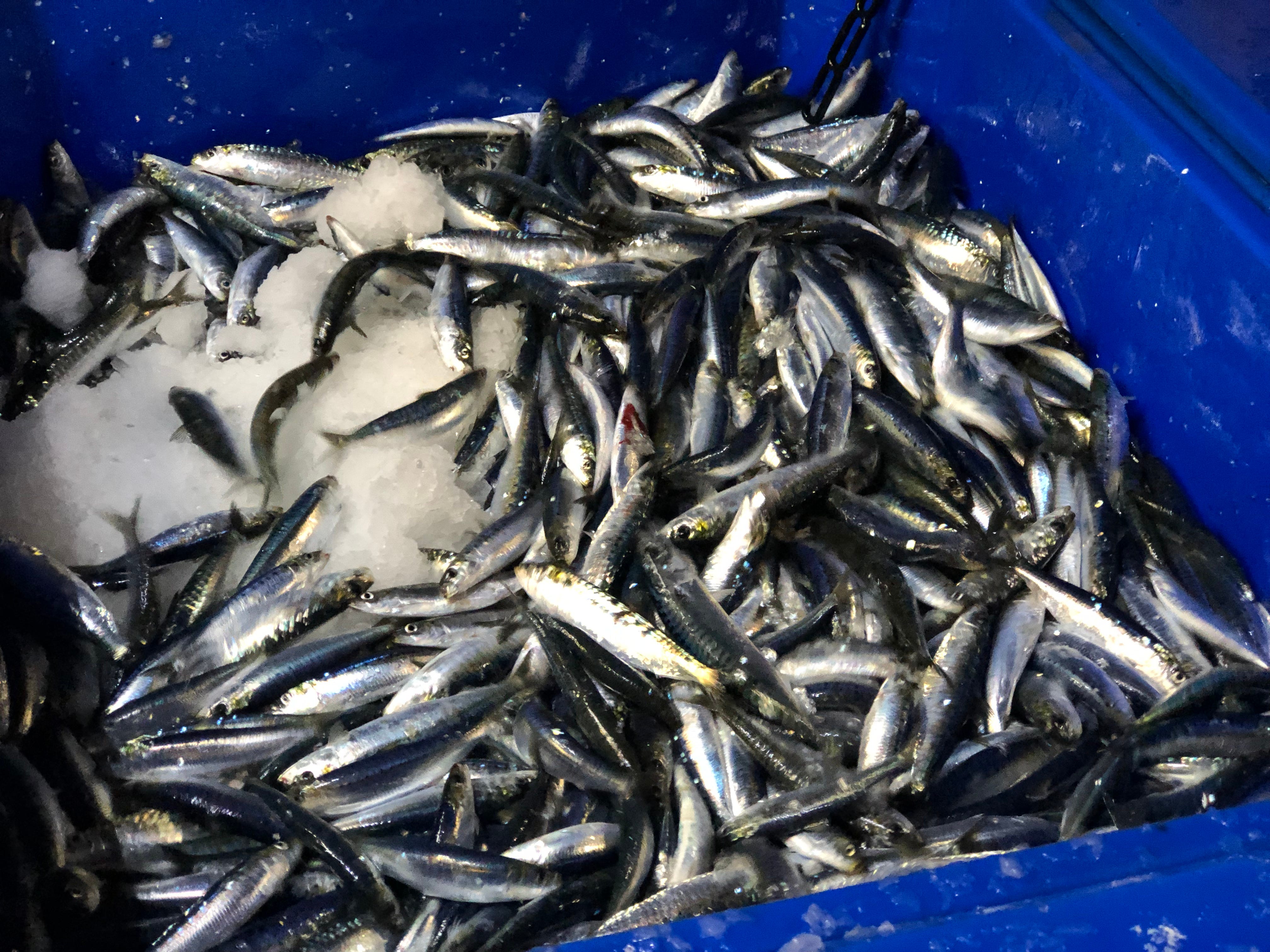
Long gone are the days when the Huers’ cry of ‘Hevva hevva’ resounded from the cliff tops on the Cornish Coast as the pilchard shoals loomed dark, but glittering, beneath the surface. The wooden boats, thus directed, would find the shoals from the Huers’ signals all round the Cornish coast from Looe and Polperro to St Ives and Port Isaac.
Now it’s a wholly different operation, as I found out a few years back, when I accompanied Newlyn skipper Will Treneer and his crew for a night’s ring netting, aboard ‘Lyonesse’ PZ81, in Mounts Bay, all within plain sight of the Harbour and the the sleeping town.
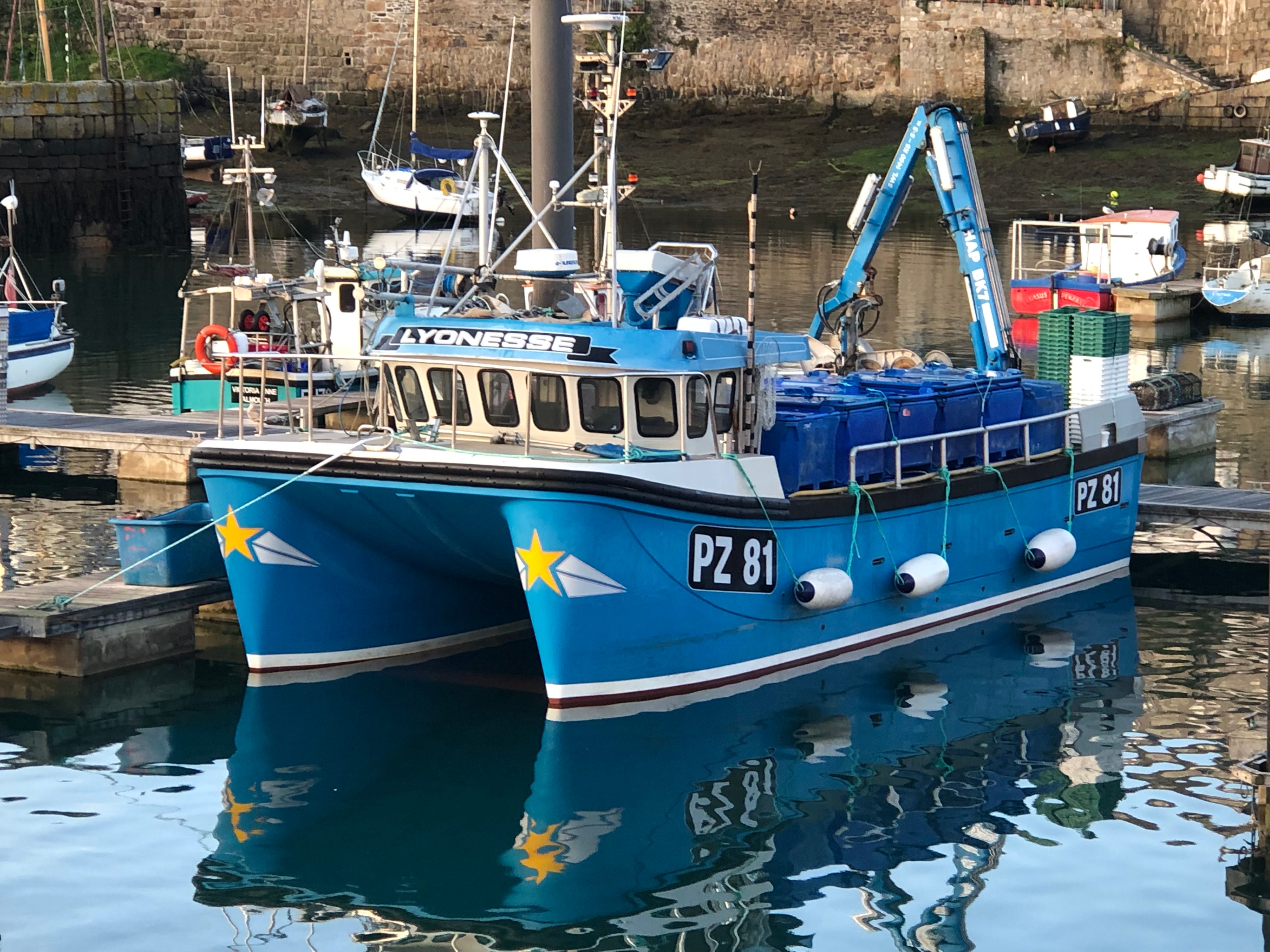
Packed with technology and the latest designs in fishing gear, the modern sardine operation can be a relentless pursuit for several months of the year between July and quite often Christmas. The boats have their ‘quota’ to fulfil, set every year by the Cornish Fish Producer’s Organisation in consultation with the local Sardine Group and the Marine Stewardship Council (MSC) the latter setting the accreditation for the fishery.
About 12 netters currently operate out of the port and when the sardines are there on the grounds and running, you could be forgiven for thinking that it’s an incredibly industrialised operation with little room for conservation. However that night, I was witness to events that very much mean commercial fishing is still the preserve of the ‘Last of the Wild Hunters’.
Theres’s a lot of excitement on any of the fishing trips I’ve made over the years, but with a young crew and the season in full swing, the fervour was palpable. As we left through the harbour gaps and headed out into the gently, dimming dusk of the bay, attentions turned to the sonar screen to try and identify the often elusive ‘marks’ or images that show the signal emitted from the boat has met with hopefully a wall of fish.
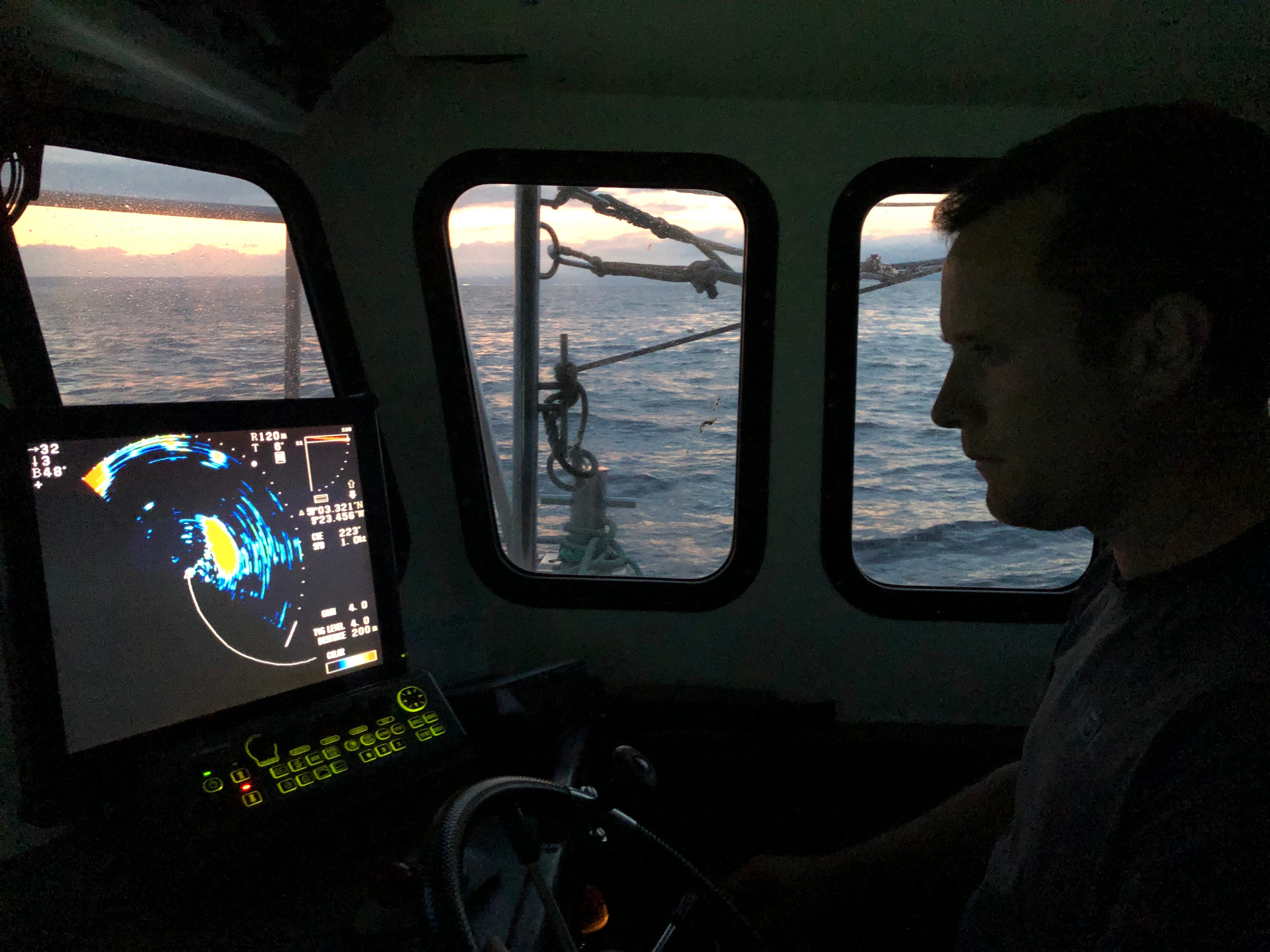
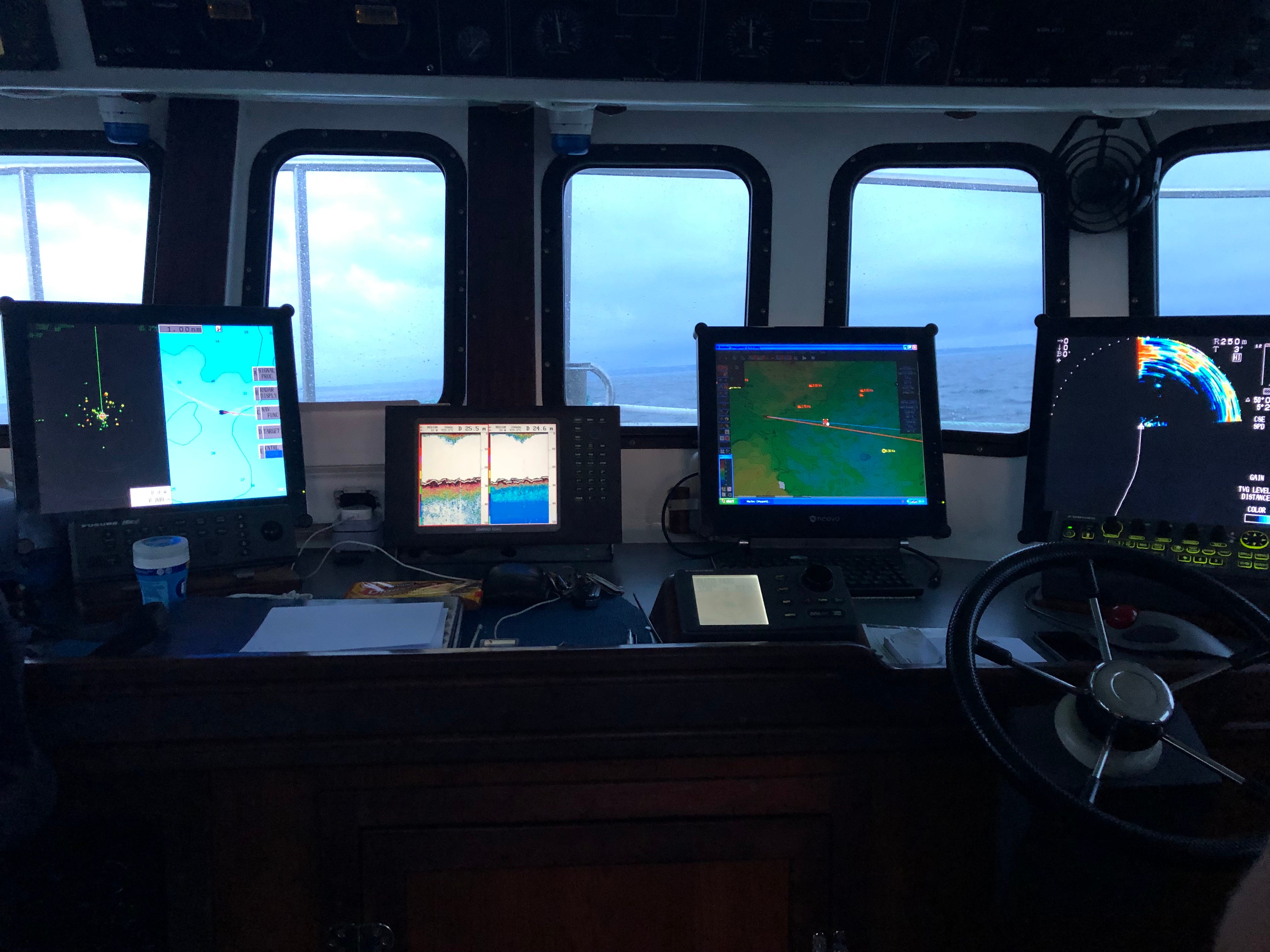
After patrolling the brooding waters of the bay for an hour or so with little luck, Will shifted position further to the Southeast and soon had picked up on a decent mark that was worthy of investigation. Following the mark and observing its movements is critical as anticipation is the name of the game, along with the consummate skill and experience becoming of a commercial skipper.
After a while, the decision is made to shoot the gear and suddenly it’s literally all hands on deck, as the nets and dahns (buoys) are readied, whilst Will moves closer to the mark.
On his command the end dahn is shot over the side, its beacon winking solemnly against the western back drop of the rapidly disappearing day, the purse-like net paying out over the stern, whilst the boat accelerates in a wide but encompassing arc around the unseen shoal. The trick is, admits Will, ‘to outsmart the fish’
As the net closes around a potentially ‘decent’ catch of an estimated 12 tonnes of sardines, it’s almost in the bag, but our silvery quarry have a trump card to play. The evening sky is moonless and partially cloudy and there’s phosphorescence in the water - a myriad of sparkling green bioluminescence, that shimmers and frolics with every splash of the bow wave and every tug on the net, as the headline floats dance and bob in the now dark water.
The net gathers, concentrating the area that the fish have to move in, and we prepare for a bumper haul, but things aren’t unfolding, quite as they should be. With the bag alongside the boat having been hauled in double quick time, it’s evident we are far short of the expected tonnage. As the ‘brail’ or landing net is lowered into the flashing and writhing hoard, it becomes apparent we only have approximately three tonnes of fish.
The annoyance on Will’s face is clearly visible and I enquire as to what has happened.
He explains that with all the phosphorescence in the water and the subsequent visibility of the gear, the fish can spook really easily. In this instance, the bulk of the shoal were able to dive vertically down and out underneath, before the purse could be fully drawn in and closed.
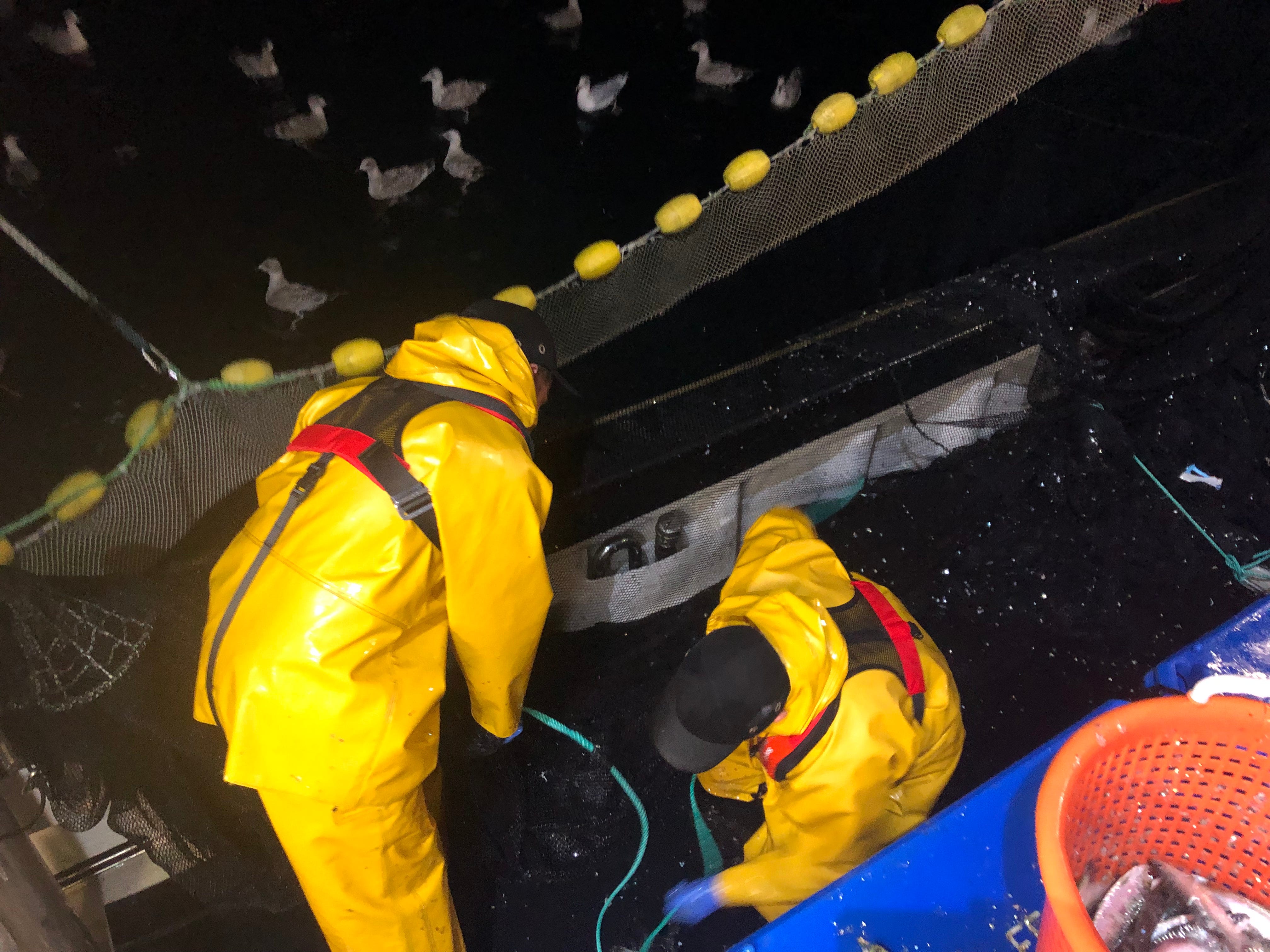
‘You can have all the technology,’ he admits wrily, ‘but at the end of the day you’re still hunting them and trying to outsmart your quarry.’
So it’s literally still man v fish……
With the net alongside, the work of landing the catch continues apace, with the brailing a constant operation until all the fish are safely iced in the bins. With that done and the gear stowed, it’s time to call it a night and we steam the relatively short distance back to the harbour, now under cover of darkness. Once alongside the quay, everyone again springs into action, keen to land the sardines and get them in the chiller quickly so the catch can be collected later for onwards transport to the buyers.
It’s a slick, mechanised operation with the skipper working the onboard crane which delivers the loaded bins of sardines onto the quayside, it doesn’t take long to clear the decks, a forklift busily ferrying the catch into the massive drive-in chiller on Newlyn Market.
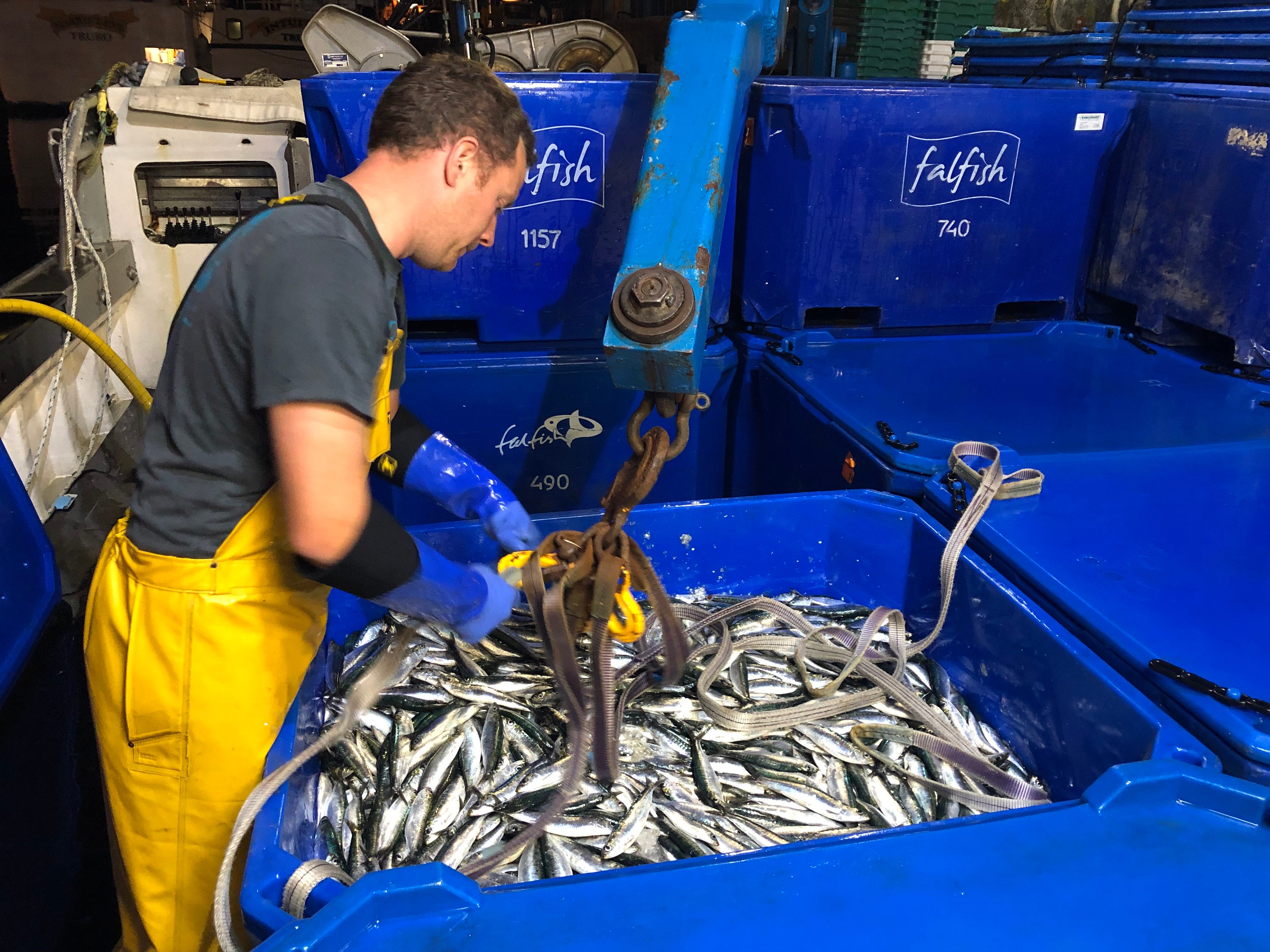
The sardines will be with customers literally within hours, some destined for restaurant and pub menus countrywide, but with many equally gracing fishmongers slabs. However, historically and most importantly, the origins of the Newlyn pilchard lie firmly in the midst of this endearing fish town, where in their millions, the yearly seasonal catches were sold for canning .
Sadly, the Newlyn Old Pilchard Works which, for years, processed the fish in their iconic tins, no longer operates, with the old building converted to flats. Canning of the fish still occurs though but ironically now in Brittany, with the fish being hand sorted and filleted before filling the tins, accompanied by extra virgin olive oil or tomato sauce.
So, in the early hours of the morning, and enlightened by my experience and clutching a bag of fresh, banana-stiff sardines, I returned to my cottage for a few hours sleep before returning to the market later that morning to see what the rest of the fleet had landed and was on offer. At the forefront of my mind, though, were the pilchards and just how much their capture had so shaped the fishing community, not just here in Newlyn, but in many of the tiny coves and harbours all along the coast here, where so many men, over time, have put to sea, in the pursuit of wild food.
Grilled sardines with Sauce Vierge
Serves 2-4
I always advocate cooking fish in as simple a manner as possible and none more so than sardines. The charring of the flesh, producing that delightful caramelisation, with the oil, the sweetness and the sheer fragrancy of it all needs little addition. However, an acidic balance to the fatty flesh of the fish is often the perfect accompaniment, to cut through the oil and if anything enhance the experience.
I love sauce vierge with fish. Its simplicity and garden-fresh aromas just offset the fish beautifully and with little effort. Also as long as the basics are there, good olive oil, tomato, shallot, the herbs can be whatever you have available locally or from your garden - basil, mint, tarragon, oregano…whatever! Seasonal seafood at its finest.
Ingredients
8 MSC Cornish sardines - butterflied or filleted
Coarse sea salt
Black pepper
Good extra virgin olive oil about 100ml
1 large shallot (chopped)
1 clove garlic (chopped)
2 large tomatoes (chopped)
4 anchovy fillets (chopped - optional)
A few capers
Bunch of flat leafed parsley
Bunch of fresh chervil
Juice of 1 lemon.
Ground black pepper
Method
Pat the sardines dry with kitchen roll and lightly oil. Turn you grill or plancha to a high heat (180C) and cook skin side down for a couple of minutes and then turn and repeat. Mix the oil, anchovies, capers and shallots and garlic and warm through over a low heat. Once nicely mixed and warm, add the tomatoes and chopped herbs, lemon juice and a good grinding of black pepper.
Serve the sardines with the sauce verge spooned over and some torn fresh herbs to garnish. Open a bottle of something suitably chilled.